
Lalita & Ravindra Nath
Our vision is to promote education , research and empowerment of women.
This embodies the values of Lalita and Ravindra Nath.
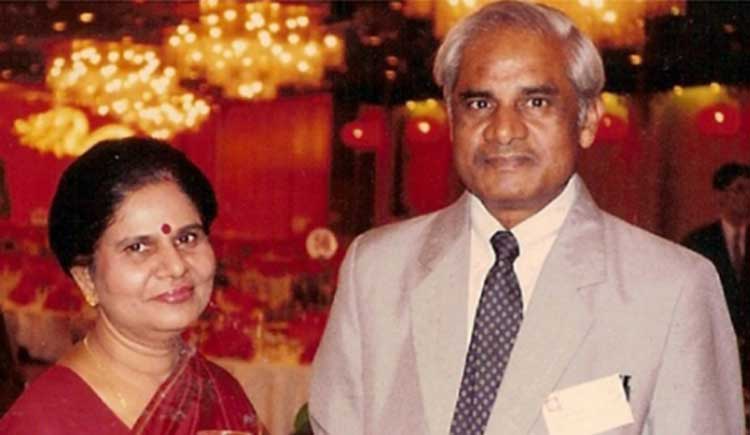
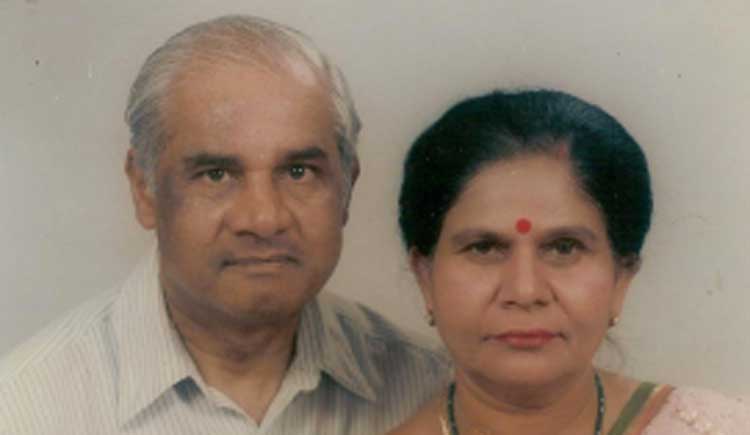
Ravindra Nath
June 21, 1930 - October 17, 2002
Scientist. Teacher. Mentor. Husband. Father. A man of extraordinary achievement and extraordinary humility.
Ravindra Nath was a distinguished Indian biochemist and professor whose scientific career spanned nearly five decades. He published more than 250 research papers and five books, trained generations of scientists, led major academic and scientific organizations, and contributed significantly to biomedical research in India.
Yet, to those who knew him best, these accomplishments do not fully explain who he was.
He was remembered as a remarkably humble man who never appeared conscious of his own stature. He believed deeply in hard work, honesty and integrity. He treated people with kindness regardless of their position or background. He rarely complained, did not hold grudges, and remained remarkably calm through both success and adversity.
For his children and grandchildren, perhaps the simplest way to describe him is this: he lived the values he believed in.
Early Life
Ravindra Nath was born in Agra, India, on June 21, 1930, the sixth of nine children. To his family he was affectionately known as Robin.
His childhood was spent in Agra, Mathura and Aligarh. Even as a young boy, two characteristics that would remain with him throughout his life were already apparent: an exceptional ability to learn and an insatiable desire to read.
Books were among his lifelong companions.
He received his BSc from Agra University in 1951 and his MSc in 1953. He then attended the Indian Institute of Science in Bangalore, where he completed his PhD in 1957.
That same year, another important chapter of his life began. He married Lalita, who would be his partner for the next forty-five years.
Their marriage became one of the foundations of his life.
A Young Couple Sets Out Into the World
Soon after their marriage, Ravindra and Lalita left India for Saskatoon, Canada, where Ravindra began a postdoctoral fellowship in Biochemistry at the University of Saskatchewan, sponsored by the National Research Council of Canada.
For a young Indian couple in the 1950s, travelling halfway across the world was a considerable adventure.
They arrived in the middle of a Saskatchewan winter and were among only a very small number of Indian families living in Saskatoon.
One story they enjoyed telling for years captured just how different their new world could sometimes seem.
Shortly after arriving, they were invited to a Christmas dinner. Ravindra and Lalita had been vegetarians all their lives. When they arrived, a large turkey occupied the centre of the dinner table. As the unusual guests from India, they were also the centre of everyone’s attention.
Not wanting to offend their hosts, they politely put some turkey on their plates.
Neither could bring themselves to eat it.
Their life and Indian culture generated enough local interest that they were featured in a Saskatoon newspaper. They embraced their new surroundings, made friends and even came to enjoy the Canadian winter. One of their favourite memories was driving with friends across the frozen Saskatchewan River.
In 1959, Ravindra moved to the United States and joined the Department of Biochemistry at the University of California, San Francisco. There he further developed his career as a protein chemist and researcher studying biochemical processes associated with DNA synthesis.
Coming Home to India
In 1962, following the death of his father and at a time when India was rapidly expanding its universities and scientific institutions, Ravindra decided to return home.
The return journey became another family adventure.
Rather than flying, the family travelled by ship from San Francisco to Bombay—a journey lasting more than a month and passing through Hawaii, the Philippines and Japan.
In an era before email, mobile phones or inexpensive international calls, five years away from India could feel like an eternity. Their arrival was therefore an occasion of tremendous excitement, with family and friends gathering to welcome them home.
After appointments at the All India Institute of Medical Sciences in New Delhi and the Indian Institute of Science in Bangalore, Ravindra joined the Postgraduate Institute of Medical Education and Research (PGIMER) in Chandigarh.
It would become his professional home for nearly four decades.
The Scientist
At PGIMER, Ravindra rose through the academic ranks and became Professor and Head of the Department of Biochemistry in 1981, a position he held until his retirement in 1992. He subsequently became Professor Emeritus in Experimental Medicine and continued his research until his death in 2002.
His research covered a wide range of areas, including trace-metal metabolism, cadmium and aluminium toxicity, metallothionein, metal-binding proteins, kidney-stone disease, nutritional deficiencies, hyperoxaluria and copper metabolism in Indian childhood cirrhosis.
Over his career, he authored or co-authored more than 250 scientific papers and five books.
One important characteristic of his scientific work was its relevance to real human disease. Long before the expression translational research became widely used, Ravindra believed that discoveries in the laboratory should ultimately help patients.
He worked with patient-derived material, developed experimental models of disease and collaborated with scientists and physicians across disciplines. His research program remained continuously funded for many years.
He also helped establish scientific organizations and served in leadership positions in India and internationally, including as President of the Indian Academy of Neurosciences and President of the International Society of Nutrition. He participated in national scientific and governmental advisory bodies and was invited to lecture and chair scientific meetings around the world.
He received numerous professional honours, including recognition from the Indian Academy of Medical Sciences, the Medical Research Council of Canada, the American College of Nutrition, the Indian Council of Medical Research and the Council of Scientific and Industrial Research.
But titles, publications and awards were never what defined him.
A Remarkably Hardworking Man
Ravindra believed deeply in the dignity of work.
Throughout his long career, he barely missed a day of work. Going to the laboratory, thinking about scientific problems, meeting students and pursuing research were not obligations he endured; they were part of who he was.
On one occasion, he contracted malaria and was forced to remain in bed for several days.
For most people, being ill would have been unpleasant enough. For Ravindra, being unable to go to work made the experience considerably worse. He was deeply unhappy at being confined to bed.
It was a small incident, but one that his family remembered because it captured something fundamental about him: work was never merely a job. It gave him purpose.
Achievement Without Ego
Despite everything he accomplished, Ravindra remained strikingly humble.
He did not need to remind people of his position, intelligence or achievements. His stature came through naturally in the way he conducted himself.
He treated people with the same courtesy and consideration whether they were internationally recognized scientists, students beginning their careers, hospital staff, relatives or people who arrived at his door asking for help.
Status mattered very little to him.
Character mattered greatly.
His guiding principles were simple but uncompromising: honesty, hard work and integrity.
Equanimity and the Gita
For his family, Ravindra’s character closely reflected an ideal described in the Bhagavad Gita: the person of steady wisdom who remains balanced through success and failure, pleasure and difficulty, praise and criticism.
Ravindra rarely seemed overwhelmed by either good fortune or adversity. Success did not make him arrogant, and difficulty did not make him bitter.
He remained steady.
Perhaps even more remarkable was his ability not to carry resentment.
At one point in his career, a colleague attempted to undercut him professionally. Ravindra knew what had happened, but he did not allow the experience to consume him or turn into a lasting grievance.
Years later, when the same colleague needed his assistance, Ravindra helped him readily.
For Ravindra, another person’s conduct did not determine his own.
He chose to behave according to his values, not according to how someone else had behaved toward him.
That quiet strength was one of the most powerful lessons he left his family.
The Teacher and Mentor
If there was one group outside his family who felt an especially deep connection to Ravindra, it was his students.
During his career at PGIMER, he trained nearly one hundred graduate students. Many went on to become professors, researchers and department heads at major institutions in India and around the world.
But their affection for him went far beyond respect for an accomplished professor.
Ravindra took a genuine personal interest in his students. He helped them obtain opportunities, encouraged their careers and, when necessary, helped them through difficulties extending well beyond their research.
For some, his intervention altered the direction of their lives.
They did not forget it.
Years later, when Ravindra and Lalita travelled to North America, former students would sometimes drive for hours simply to visit him. They came not because professional etiquette required it, but because they wanted to see the teacher who had once believed in them and helped them build their lives.
During the final months of Ravindra’s illness, former students, colleagues and friends came from around the world to see him.
Their presence was perhaps one of the clearest measures of the life he had lived.
Ravindra and Lalita
Behind Ravindra’s professional life was an extraordinary partnership with Lalita.
He adored his wife, respected her intelligence and supported her decisions. Their relationship was built on affection and mutual respect.
Those closest to them do not remember Ravindra raising his voice at her.
When Lalita was ill, he cared for her personally and remained by her side.
They entertained constantly. Students, colleagues, relatives and friends flowed through their home, and Lalita became an integral part of the community that developed around Ravindra’s professional life.
In their later years, they travelled together to scientific meetings around the world. Among colleagues and students, the two increasingly became known almost as a single unit: Ravindra and Lalita.
His accomplishments may have carried his name, but he understood that much of what he had achieved had been made possible by the woman who had shared the journey with him from its beginning.
A Father Who Led by Example
Ravindra was not a father who needed to give his children frequent lectures about character.
He demonstrated it.
His children saw a man who worked hard without complaining, who remained modest despite success, who helped others without expecting recognition, who treated their mother with respect, and whose principles did not change depending upon circumstances.
He also took enormous pride in his children.
On one occasion, a friend asked him:
“Dr. Nath, you have achieved so much in life. What do you consider your greatest achievement?”
Ravindra answered without hesitation:
“My children are my biggest achievement.”
For a man whose professional résumé contained hundreds of publications, international recognition and decades of scientific accomplishment, his answer revealed what mattered most to him.
Ravindra and Lalita had three children, each born in a different country.
Avindra (Avi) was born in Saskatoon, Canada, and later settled in the United States.
Pamela (Peema) was born in San Francisco and later settled in India.
Monica (Meenu) was born in Allahabad and later settled in Canada.
The family often enjoyed the curious symmetry that each child was born in one country and eventually made a life in another.
A Home With an Open Door
Ravindra’s generosity extended well beyond his immediate family.
Relatives, friends and even acquaintances knew that if they needed help, they could approach him.
Because he worked at PGIMER, people frequently contacted him when a family member was seriously ill. Ravindra would help them navigate the hospital system, locate the appropriate physicians and obtain the care they needed.
Some travelled from distant places for treatment and stayed in the Nath family home.
Ravindra and Lalita welcomed them.
Their home was not simply a private residence. At different times it became a guest house, meeting place, student gathering place and temporary refuge for people going through difficult circumstances.
One such episode left a particularly enduring memory.
Ravindra had gone to considerable lengths to help arrange medical care for the son of a family friend. The family was so moved by his kindness that they told him:
“We spent a lifetime looking for God in temples, but we have found him here in Dr. Nath.”
Ravindra himself would almost certainly have been uncomfortable with such praise.
And perhaps that is precisely why the words say so much about him.
His Final Years
Even after formally retiring, Ravindra did not truly retire.
He became Professor Emeritus and continued his research. The curiosity and work ethic that had defined him as a young scientist remained intact.
During the final months of his illness, people came from many places to see him. Students came to thank their teacher. Colleagues came to honour a scientist they respected. Friends and relatives came because he had once been there for them.
Although gravely ill, Ravindra remained optimistic.
Rather than allowing others to comfort him, he would often reassure them that he would soon recover.
It was consistent with the way he had lived: hopeful, steady and unwilling to be defeated by circumstances.
The Legacy He Left Behind
Ravindra Nath died on October 17, 2002.
His scientific legacy can be counted: more than 250 publications, five books, nearly one hundred graduate students, decades of research, scientific societies established, institutions served and honours received.
But the more important parts of his legacy are harder to count.
They live in students whose careers he helped launch.
In patients and families he helped during frightening moments.
In colleagues whom he treated with generosity, including those who had not always treated him generously.
In the marriage he built with Lalita.
In the pride he took in his children.
And in the principles his family witnessed every day.
For the grandchildren and great-grandchildren who did not have the opportunity to know him personally, perhaps these are the most important things to know about their grandfather and great-grandfather:
He was brilliant, but never arrogant.
He achieved greatly, but remained humble.
He worked extraordinarily hard, but always found time to help another person.
He was principled without being judgmental.
He was strong without being harsh.
He forgave easily.
He treated people with dignity.
He loved his wife deeply.
He was immensely proud of his children.
And through both success and adversity, he remained remarkably calm and steady.
His life demonstrated that greatness does not have to announce itself.
Sometimes it is found in the person who quietly does his work, keeps his principles, helps whoever comes to his door, forgives when he could resent, remains humble when he could boast, and leaves behind generations of people whose lives are better because he was part of them.
That was Ravindra Nath.
Lalita Nath
August 29, 1939 – October 25, 2012
Wife. Mother. Teacher. Student. Grandmother. Protector. A woman of remarkable intelligence, courage and love.
Lalita Nath lived a life centered on family, learning and service to others.
She was intelligent and practical, elegant and creative, deeply loving and fiercely protective. She could be extraordinarily warm, but when it came to defending her family or standing up for something she believed was right, few people were braver.
She supported her husband’s remarkable scientific career while building a life and identity of her own. She raised three children across three countries, taught generations of young students, returned to university in her late thirties and excelled academically, encouraged her daughters to enter professions that were still unusual for women, cared devotedly for her husband through his final illness, and later became the beloved centre of her grandchildren’s lives.
To her grandchildren and great-grandchildren, perhaps the best way to understand Lalita is this:
She loved fiercely, lived fully and never did anything halfway.
Growing Up in Allahabad
Lalita was born on August 29, 1939, in Allahabad, India, to Ram Charan Das and Leelavati. She was the fourth of five children.
Her father was a prominent advocate and belonged to an affluent family with considerable ancestral property. The family had connections with the erstwhile princely world of India; her father’s sister was the Maharani of Chitrakoot before Indian independence.
Chitrakoot itself occupies a special place in Indian tradition. It is closely associated with the Ramayana and is traditionally believed to have been home to Lord Ram, Sita and Laxman for a significant part of their fourteen years of exile.
Lalita therefore grew up surrounded by privilege and tradition.
Yet privilege did not make her entitled.
Despite being raised in considerable comfort, she developed into a remarkably grounded and sensible young woman. Even as a teenager, she appeared to understand that wealth alone did not make a meaningful life.
She completed a Bachelor’s degree in Home Science and also learned to play the sitar.
When the time came for her parents to arrange her marriage, Lalita knew what she wanted.
She told them that she was not particularly interested in marrying into another wealthy family.
What mattered to her was something quite different:
She wanted her husband to be highly educated.
That decision would shape the rest of her life.
Lalita and Ravindra
Lalita was only eighteen when she married Ravindra Nath, who was nine years older.
On the surface, they were strikingly different.
She was about 5 feet 1 inch tall. He was about 5 feet 10 inches.
Ravindra was calm, quiet and reserved.
Lalita was spirited, expressive and fiery.
And somehow, the combination worked beautifully.
It truly became a partnership of opposites who complemented one another.
Ravindra’s calmness provided an anchor to Lalita’s energy. Her warmth, determination and practical nature gave strength to his deeply academic life.
Their marriage would last forty-five years.
A Teenage Bride in Canada
Soon after their marriage, the young couple left India for Saskatoon, Canada, where Ravindra began a postdoctoral fellowship at the University of Saskatchewan.
For Lalita, still a teenager, this meant leaving behind her parents, siblings, extended family and the comfortable world in which she had grown up and travelling halfway across the world to a country she barely knew.
There were very few Indians living in Saskatoon at the time.
Suddenly, a young woman from Allahabad found herself walking through the streets of Saskatchewan in the depths of winter.
And she was impossible not to notice.
Lalita continued to wear her beautiful Indian sarees, an unfamiliar sight to many people in Saskatoon in the late 1950s. Her appearance and story generated enough curiosity that she was interviewed by a local newspaper, which published an article about her.
Within a year of arriving in Canada, Lalita faced another enormous life change.
At nineteen years old, she became a mother.
Her first child, Avi, was born in Saskatoon.
Her Canadian doctor was concerned that Lalita’s lifelong vegetarian diet might not provide sufficient nutrition during pregnancy. On his advice, she reluctantly agreed to eat meat.
For someone who had grown up completely vegetarian, this was not easy.
Their landlady lovingly prepared meat for her, and Lalita forced herself to eat it, not because she wanted to, but because she believed it was important for the health of her unborn child.
It was an early example of something her family would see throughout her life:
When Lalita believed her family needed something, she would do whatever was necessary.
Three Children in Three Countries
The family’s journey soon continued to the United States.
At the age of twenty-one, Lalita gave birth to her second child, Pamela, in San Francisco.
A few years later the family returned to India.
At twenty-four, Lalita gave birth to her third child, Monica, in Allahabad.
By the age of twenty-four, Lalita had already lived in India, Canada and the United States and had given birth to three children in three different countries.
She had adapted to cultures thousands of kilometres apart, supported a husband building an international scientific career, and created a home for three young children.
Her adulthood had begun very quickly.
She rose to it.
The Backbone of the Family
Throughout Ravindra’s scientific career, Lalita was the backbone of their family.
His work demanded long hours, research commitments, students, conferences and travel. Lalita created the stability that made much of that work possible.
But describing her simply as “the woman behind her husband’s success” would be incomplete.
She was also an intelligent and ambitious woman in her own right.
She taught at several stages of her life, adapting her professional ambitions to the needs of her growing family.
After returning to India from North America, she once started a pre-kindergarten school in the garage of their home.
Later, while living in Chandigarh, she taught junior classes at schools including Christ High School and Guru Nanak Public School.
Wherever she taught, she took her work seriously.
Teaching was never something she did casually to occupy her time.
She wanted her students to learn well. She took pride in the quality of her classroom, her lessons and her children’s progress. During the periods in which she taught, she was repeatedly recognized for the quality of her teaching.
She also became involved in activities beyond the classroom.
She served as a Boys Scout teacher and enthusiastically helped organize school plays and annual functions.
Whatever Lalita took on, she became involved completely.
The Teacher at Home
Her most important classroom, however, was her own home.
Lalita was intensely involved in her children’s education.
Homework, examinations, school projects and academic progress mattered greatly to her. She believed strongly in education and made sure her children understood its importance.
She did not simply tell them to study.
She studied with them, encouraged them, kept track of their work and created the structure that allowed them to succeed.
All three children performed exceptionally well academically.
Much of that achievement had its foundation in their mother’s constant involvement.
Yet Lalita did not believe education belonged only to her children.
She believed in continuing to learn herself.
Going Back to University at 38
When Avi entered medical school, Lalita made an unusual decision.
Nearly twenty years after her marriage, at approximately thirty-eight years of age, with three growing children and a busy household, she returned to university.
She enrolled in a Master’s degree in Ancient Indian History at Panjab University in Chandigarh.
She was returning to formal education at an age when many women of her generation would never have considered doing so.
And she did not merely complete the degree.
She ranked second in her Master’s program.
It was completely characteristic of Lalita.
If she was going to do something, she wanted to do it well.
Her degree also quietly sent an important message to her children: learning does not have an expiry date.
Intelligent, Practical and Usually With an Answer
Lalita possessed an unusual combination of academic intelligence and practical common sense.
She understood people.
She understood situations.
And when life presented a complicated problem, she almost always seemed to have an answer.
Family members and friends regularly turned to her for advice.
Whether the problem involved children, marriage, education, family disagreements or an important life decision, people trusted Lalita’s judgment.
She could look at a confusing situation, cut through the noise and identify what really mattered.
And then she would tell you what she thought.
Usually quite clearly.
The Family's Dragon Lady
Her children sometimes saw another side of her.
Lalita could be the family’s fierce dragon lady.
If someone threatened, mistreated or underestimated one of her children, her protective instincts emerged immediately.
She was loving but she was not timid.
And people quickly learned that taking on one of Lalita’s children meant taking on Lalita.
Behind that fierceness was profound loyalty.
Her family always knew that when circumstances became difficult, she would stand beside them.
That sense of security was one of the greatest gifts she gave her children.
Raising a Son and Daughters as Equals
Lalita and Ravindra were remarkably progressive in how they raised their children.
They had one son and two daughters, but they did not believe that their daughters should have smaller dreams.
Their expectations were based on ability, not gender.
When their daughters wanted to pursue engineering, some relatives cautioned Lalita against it.
At the time, engineering remained overwhelmingly male, and female engineers were uncommon.
Lalita was not persuaded.
If her daughters were capable and that was the profession they wanted, she believed they should pursue it.
She stood firmly behind them.
Both eventually became engineers.
For her daughters, this was an important inheritance: the belief that being a woman should never define the limits of what they could achieve.
The Creative Side of Lalita
Lalita was also extraordinarily creative.
Cooking was another wonderful expression of Lalita’s creativity. She had a natural flair for experimenting with ingredients and was known for creating delicious and imaginative recipes of her own. Just as important to her as taste was presentation, her beautifully arranged dishes often drew admiration. She loved collecting recipes and filled more than half a dozen diaries with pages upon pages of dishes – these diaries are now a family treasure.
She loved art projects, sewing and especially knitting.
When her children were young, she stitched many of their clothes herself.
And because Lalita was a perfectionist, homemade did not mean ordinary.
Her children were often among the best-dressed children in the neighbourhood.
She paid attention to colours, fabrics, finishing and detail.
Knitting remained one of her lifelong pleasures.
She knitted beautiful sweaters for Ravindra, for her children and later for her grandchildren.
She almost always had something in progress.
She might be watching a movie with knitting needles in her hands.
When the family travelled, the knitting came too.
Long journeys simply meant more time to finish the next sweater.
Decades later, those handmade sweaters became much more than clothing.
They became pieces of her: objects into which she had literally woven hours of care.
Creating Celebrations
Lalita also loved bringing family together.
When her three children married, she threw herself into planning their weddings.
She organized each one with the same intensity with which she approached everything else.
The details mattered.
The clothes mattered.
The ceremonies mattered.
The guests mattered.
She wanted each celebration to be beautiful and memorable.
For Lalita, weddings were not simply events.
They were milestones in the story of her family.
Seeing the World Together
As Ravindra’s scientific reputation grew, invitations took him to conferences and meetings around India and the world.
Whenever circumstances permitted, Lalita travelled with him.
Together they visited many countries and travelled extensively within India.
The young couple who had started their married life by travelling to an unfamiliar Canada continued exploring the world together decades later.
Their personalities remained different, but their lives had become deeply intertwined.
They had built a family, careers, friendships and a shared history stretching across continents.
Eleven Months Beside Ravindra
In 2001, their lives changed dramatically.
Ravindra was diagnosed with brain cancer.
For the next eleven months, Lalita devoted herself almost entirely to caring for him.
The woman who had stood beside him throughout his career now stood beside him through the greatest challenge of their lives.
She was with him constantly.
Hour after hour.
Day after day.
For nearly a year, she organized her life around his care.
The devotion with which she cared for Ravindra during those months perhaps said more about their marriage than anything else could.
When he died on October 17, 2002, Lalita was devastated.
For forty-five years, he had been her companion.
The fiery young eighteen-year-old and the quiet twenty-seven-year-old scientist had grown older together.
Suddenly, she had to learn how to live without him.
Beginning Again
Lalita never stopped missing Ravindra.
But she also possessed enormous courage.
After his death, she moved to Bangalore to live with her daughter Pamela and son-in-law Anurag.
There, another beautiful chapter of her life began.
She became deeply involved in the lives of her grandchildren.
And grandmotherhood suited Lalita perfectly.
The same woman who had once supervised her own children’s schooling, stitched their clothes and fiercely protected them now poured that energy into the next generation.
She did not remain on the sidelines of her grandchildren’s lives.
She entered their world.
She talked to them, advised them, laughed with them and became their friend.
All six of her grandchildren adored her.
A Grandmother Who Learned Facebook
Lalita belonged to a generation that had grown up without television, computers or mobile phones.
That did not stop her.
As her grandchildren grew older and technology became part of their lives, Lalita wanted to remain connected with them.
So she learned to use a computer.
And then she learned Facebook.
For someone born in 1939, this was not simply about technology.
It was about relationships.
If Facebook was where her grandchildren were communicating, then Lalita was going to figure out Facebook.
It captured something essential about her character.
She adapted. She learned.
And she found a way to remain part of the lives of the people she loved.
The Grandmother Her Grandchildren Remember
Her grandchildren knew a somewhat different Lalita from the mother her children had known.
They knew the affectionate grandmother who had time for their stories.
They knew the woman who knitted for them, worried about them, celebrated their accomplishments and wanted to know what was happening in their lives.
They knew they had someone firmly in their corner.
And just as her own children had known decades earlier, her grandchildren knew one thing with certainty:
Nani would always be there for them.
Missing Ravindra
Even as she built a fulfilling life with her children and grandchildren after Ravindra’s death, she never stopped remembering him.
Their forty-five years together had shaped almost all of her adult life.
She spoke of him often and missed him deeply.
They had begun their married life as a young couple setting out for Canada, raised three children on three continents, built a home filled with students, relatives and friends, travelled the world together and stood beside one another through both triumph and illness.
The partnership had ended physically, but never emotionally.
October 25, 2012
On October 25, 2012, ten years after Ravindra’s death, Lalita died following an accident.
For her family, the loss was sudden and heartbreaking.
But there was also comfort in imagining that the two people whose lives had been so inseparable were together once again.
After a decade apart, Lalita had joined Ravindra.
The Legacy She Left Behind
Lalita’s legacy cannot be measured through publications, professional titles or awards.
It is found in people.
It is found in the children whose education she nurtured.
In daughters whom she taught never to limit themselves because they were women.
In the young students she taught with such pride.
In the family members who came to her for advice.
In the beautiful sweaters her hands created.
In the weddings she painstakingly organized.
In a husband whose ambitions she supported for forty-five years.
In the eleven months when she scarcely left his side.
And especially in the six grandchildren who knew how completely their grandmother loved them.
For the great-grandchildren who will know Lalita only through photographs and family stories, perhaps these are the things they should remember:
She grew up surrounded by privilege but remained grounded.
She was small in stature but enormous in personality.
She was intelligent and never stopped learning.
She was creative and made beautiful things with her own hands.
She believed daughters deserved the same opportunities as sons.
She could solve almost any family problem.
She protected the people she loved fiercely.
She supported her husband’s dreams while continuing to pursue her own.
She was a devoted mother and an adored grandmother.
And once she loved you, she was completely and unmistakably on your side.
Ravindra brought calmness to their family.
Lalita brought fire.
Together, they created a home built on education, integrity, hospitality, equality and love.
And generations later, those values remain part of the family they created.
That was Lalita Nath.